Why British curriculum students need the right online resources
If you’re studying under the British education system, you already know one thing: the work can feel very different depending on whether you’re doing IGCSEs, GCSEs, or moving into A levels. Some subjects are heavy on memorising facts, others are all about analysis, and a few seem to expect you to do both at once. That’s exactly why the right online resources matter so much. They can help you revise smarter, understand exam expectations, and stop wasting time on material that doesn’t actually match your syllabus.
The good news? There are now excellent websites and study tools built specifically for British curriculum students. Whether you need topic explanations, past papers, mark schemes, or a better way to organise your revision, there’s something out there that can make your life easier. The trick is knowing which resources are genuinely useful and which ones just look impressive at first glance.
Start with the exam board resources
One of the smartest places to begin is with your own exam board. That might not sound exciting, but it’s one of the most reliable ways to study properly. British curriculum exams are very specific, and the wording of the syllabus matters more than students sometimes realise. If you’re preparing for A levels or IGCSEs, the first thing you should check is what your board expects from you.
CAIE, AQA, CCEA, and OCR resources
If you’re following Cambridge International, the CAIE resources are especially helpful for finding past papers and syllabus-related material. For students sitting AQA papers, the AQA section can be a useful starting point for practice and revision. If your school uses CCEA, the CCEA resources are worth bookmarking, and OCR students can benefit from the OCR collection as well.
Why does this matter? Because studying from the official or exam-board-aligned material helps you revise in the same style you’ll be tested in. That means fewer surprises on exam day. And honestly, that alone can take a huge amount of stress off your shoulders.
Past papers are still one of the best study tools
There’s a reason teachers keep talking about past papers: they work. No flashy app can replace the value of practising actual exam questions. For British curriculum students, past papers are especially important because exam boards often repeat question styles, command words, and topic patterns. If you’ve done enough papers, the exam starts to feel familiar rather than frightening.
For IGCSE exam tips, this is probably the biggest one: don’t just do the paper and move on. Mark it properly. Look at where you lost marks. Was it because you didn’t know the content, or because you didn’t answer the question the way the mark scheme wanted? That difference matters a lot. A student who understands the mark scheme usually improves faster than one who simply keeps reading notes.
For A levels exam preparation, past papers become even more valuable because the questions often demand deeper thinking. You’re not just recalling facts; you’re showing understanding, evaluation, and sometimes comparison. Practising under timed conditions helps you manage that pressure and build confidence in writing clear, focused answers.
Revision websites that explain difficult topics clearly
Let’s be honest: some topics are just annoying. Whether it’s physics equations, chemistry bonding, English literature themes, or history source analysis, every student hits a wall now and then. That’s where good explanation websites come in. The best ones don’t just dump information on you. They break ideas down in a way that actually makes sense.
Look for resources that use simple diagrams, short videos, and step-by-step explanations. If you’re studying science, visual learning can make a huge difference. If you’re studying English or humanities, clear model answers and essay breakdowns can help you see what strong work looks like. The point is not to replace your class notes, but to give you another way into the topic when your textbook feels too dense.
Students in the British education system often need to switch between memorising content and developing exam technique. A good revision site supports both. It should help you understand the topic and show you how to use that knowledge in an exam setting.
Video lessons can help when reading isn’t enough
Some students learn best by reading. Others need to hear an explanation before it clicks. If you’re the second type, video lessons can be a lifesaver. Short, focused videos are especially useful when you’re revising after a long school day and your brain refuses to cooperate with another page of notes.
The best video resources are the ones that stay close to the syllabus and don’t wander off into irrelevant detail. A five-minute explanation of a difficult chemistry concept can be more useful than a 30-minute lecture that covers too much. That’s particularly true for A levels, where time is limited and every topic needs to connect back to exam questions.
For IGCSE students, video lessons can also be a great way to revise quickly before quizzes or mocks. They’re not a substitute for active revision, but they can help you build understanding before you start doing questions yourself.
Online flashcards and quiz tools for active recall
Reading notes over and over feels productive, but it’s often one of the least effective ways to revise. Active recall works better, which is why flashcards and quiz tools have become so popular. They force your brain to retrieve information instead of just recognising it on a page.
For British curriculum students, flashcards are especially useful in subjects like biology, geography, economics, languages, and history. You can use them for definitions, case studies, formulas, dates, and key terminology. The best part is that they’re quick to review, so you can fit revision into small pockets of time.
If you’re preparing for A levels, flashcards can also help with essay subjects. You can use them for quote banks, theorists, evaluation points, or key examples. For IGCSE exam tips, flashcards are brilliant for strengthening core knowledge before you move on to exam practice. Just don’t make them too crowded. One idea per card is usually enough.
Subject-specific resources make revision more efficient
Not all subjects need the same kind of support. That’s why subject-specific websites are so useful. A maths student needs structured practice and worked solutions. An English student needs essay plans and text analysis. A science student needs diagrams, experiments, and exam-style questions. Trying to use one generic resource for everything can get messy fast.
For maths and science, online platforms that offer topic-by-topic questions are particularly helpful. You can target your weak spots instead of revising everything randomly. For English, look for resources that explain how to structure responses and analyse language or literature with confidence. For humanities subjects, revision sites that include timelines, case studies, and model answers can save a lot of time.
The British education system is broad, and that’s one of its strengths. But it also means students need to be selective. The best resource is the one that matches your exact syllabus and the way your subject is assessed.
How to use online resources without getting overwhelmed
Having too many resources can be almost as frustrating as having too few. You open one tab for notes, another for videos, another for past papers, and suddenly you’re not revising anymore. You’re just collecting links. Sound familiar?
A better approach is to choose a small set of reliable tools and stick with them. For example, you might use one site for syllabus information, one for past papers, and one for flashcards. That’s usually enough. The real progress comes from how you use the resources, not how many you bookmark.
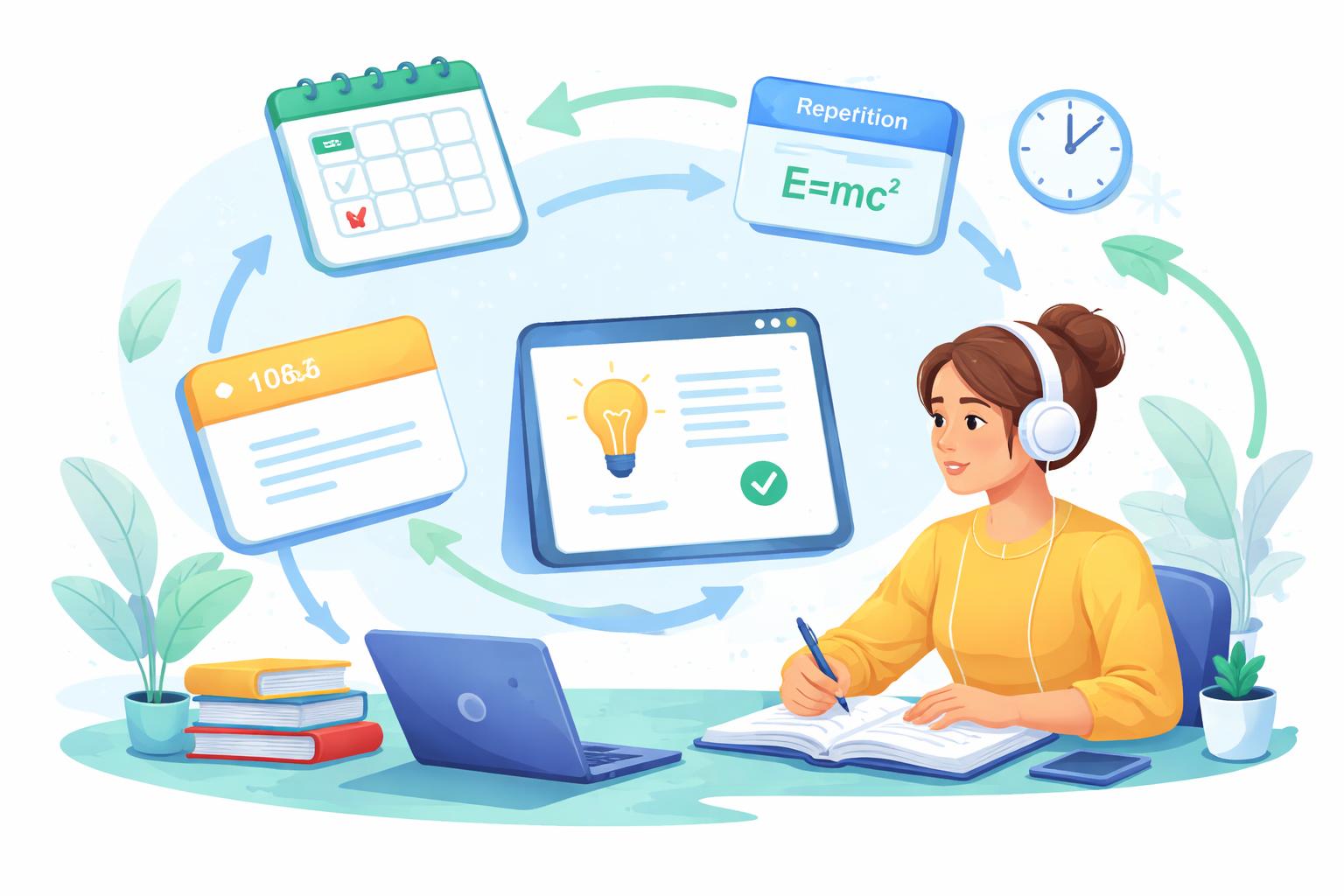
Try to build a simple routine. Start with content review, then move to active recall, then do exam questions. If you’re preparing for A levels exam preparation, make sure you spend a decent amount of time on timed practice and essay planning. If you’re working on IGCSE exam tips, focus on understanding command words, learning the mark scheme language, and practising short-answer accuracy.
Smart revision habits that make online resources work better
Online tools are useful, but they work best when paired with good habits. For example, if you watch a revision video, pause it and write down the main points in your own words. If you use a past paper, don’t just check the answers. Ask yourself why the correct answer is correct. If you make flashcards, revisit them regularly instead of cramming the night before.
It also helps to revise in shorter, focused sessions. Twenty-five to forty minutes of proper concentration is often better than two hours of half-distracted scrolling. And if you’re studying for multiple subjects, mix them up a little. Switching between subjects can keep your brain alert and stop revision from feeling stale.
One more thing: use online resources to build exam confidence, not just knowledge. That’s a big part of success in the British curriculum. Students who know the content but panic in the exam room often underperform. Practice, repetition, and familiarity can make a real difference.
Choosing the right resources for your stage of study
Your needs will change depending on where you are in the British education system. If you’re in the early stages of IGCSEs, focus on understanding the basics and getting used to exam language. If you’re closer to the final exams, shift more of your energy toward timed practice and mark scheme analysis. By the time you reach A levels, your revision should become more targeted and analytical.
That’s why flexibility matters. A resource that’s perfect for one stage may not be ideal for another. A beginner might need clear explanations and summaries. A sixth-form student might need essay frameworks and advanced question practice. There’s no single perfect formula, but there is a smart one: match the resource to the task.
Making online study feel less lonely
There’s also a human side to all this. Studying online can feel isolating, especially when exams are approaching and everyone seems to be revising in their own bubble. Good resources can help with that too. Some platforms include discussion spaces, shared notes, or student communities where you can compare ideas and ask questions. Even if you only use them occasionally, they can make revision feel a little less heavy.
At the end of the day, the best online resources are the ones that help you study with more purpose and less panic. They should save time, sharpen your understanding, and give you a clearer sense of what examiners want. If you’re working through IGCSEs or planning ahead for A levels, that kind of support is invaluable.
So rather than trying to find every resource available, start with the ones that match your syllabus, your learning style, and your goals. A few well-chosen tools can do far more for your grades than a long list of links you never really use. And once you’ve found the right mix, revision starts to feel a bit more manageable — which, let’s face it, is half the battle.